
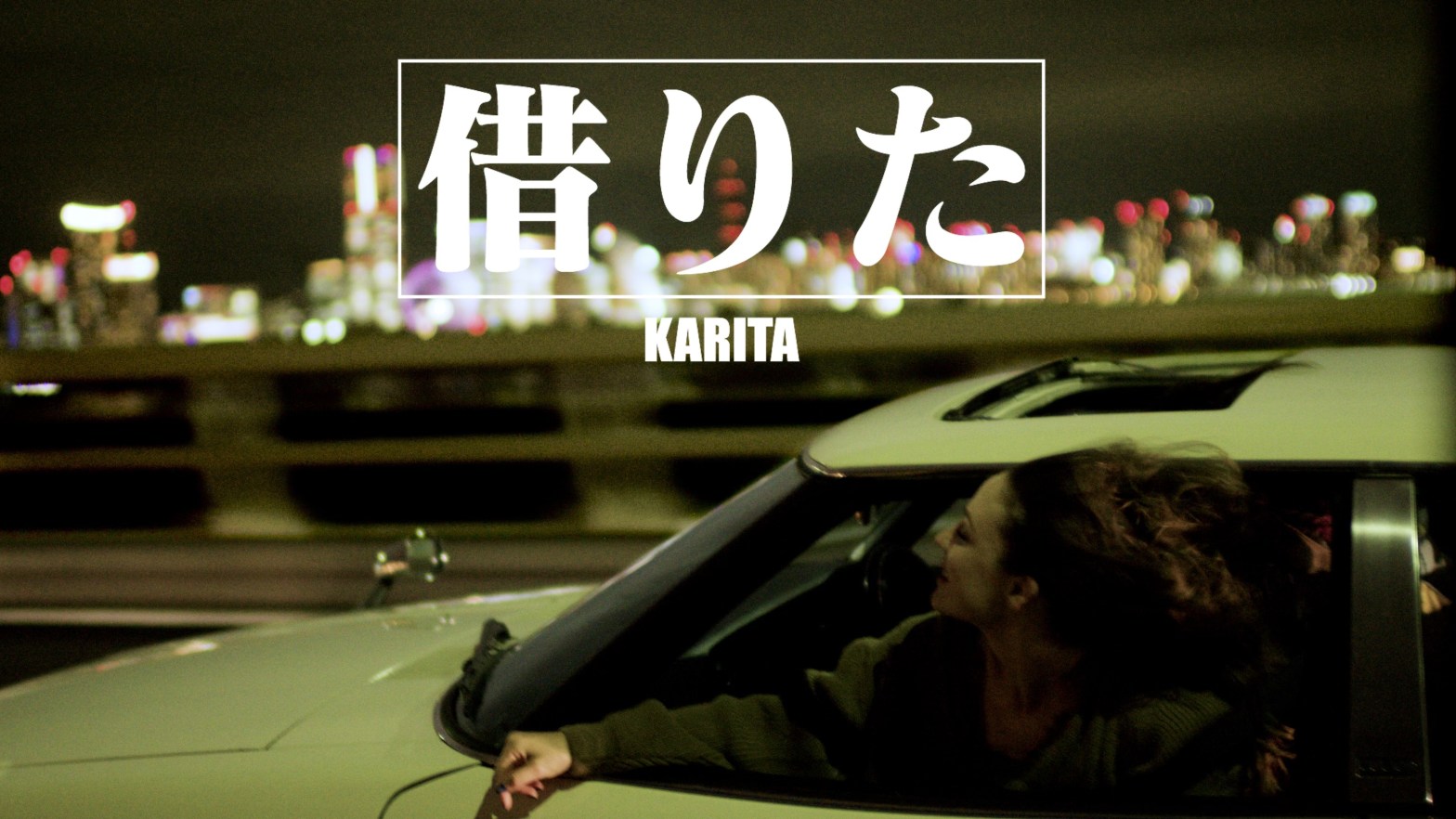
A coming-of-age story set in a foreign land, Katrita is a fantastic short film by writer, director and star Virginia de Witt, which saw its debut at the influential Dances With Films Festival that was held recently. The film sees de Witt’s character Nico in Japan, socializing at a bar with her friend and co-worker, Rumi. While drinking, the conversation turns to the comparison between Nico’s experience growing up in America and her time spent in Japan, where people have a very exaggerated view of American culture. Only able to speak some of the Japanese language, Nico tells the story of a childhood joyride, leading to a situation where Nico and her friends are given an opportunity to recreate the story when one of the friends, Kenji, reveals that his uncle gave him his keys in order to assist him with walking his dog while his uncle was away, leading to the group taking the car for an unauthorized trip through Tokyo.
De Witt brings a lot of fun and adventure to this story, as the events of the joyride don’t exactly go as planned. From a carsick friend to a heart to heart during a snack run, the night is certainly an unforgettable one, even as Nico harbors some guilt for exaggerating her story a bit to seem cool in front of her new friends.
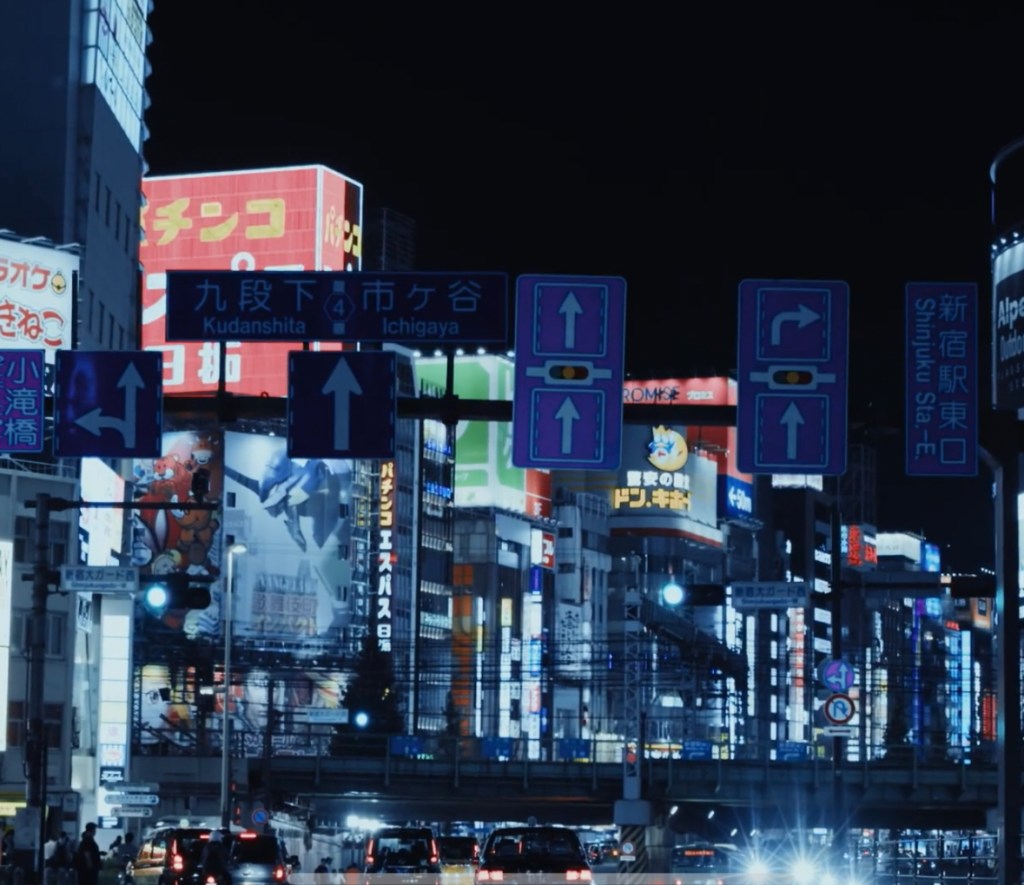
The cast does a wonderful job in this film, especially given their levels of experience. Aside from de Witt and actress Mika Ushio (who played Suki), the rest of the cast (Kouki Kutsuna, who played the role of Ren, Hayato Kurihara who played Kenji and Haruka Hirata in the role of Rumi) had little to no acting experience prior to this film, which lends a bit of realism to this story. The lack of experience actually benefits this film a lot, allowing all the characters to feel real and genuine when interacting with the other characters and the world around them.
This film has all the beats of a good adventure story from the perspective of a young person, especially one in an unfamiliar place. There’s wild situations, expanding bonds, and a night that will spurn change in those involved, allowing them to grow and mature, learning and adding this experience into the story of their lives. Wonderfully heartfelt, Karita is a film that will leave any viewer satisfied with a joyful and fun experience full of laughter and familiarity.
Not only did we have the honor of getting to view Karita before its impeding screening at the upcoming HollyShorts Film Festival after the stellar Dances With Films debut, we also had the opportunity to interview de Witt about the film. A big thanks to Virginia for taking the time to speak with us!

BitPix: So what sparked the idea for this project?
Virginia de Witt: I was approached by Mitsuhiro Kubo, the owner of GR8 fashion boutique in Tokyo, about writing, directing, and starring in a short film about an American in Tokyo. So really, it was his idea. As a result, I asked him to play a cameo role as the scary uncle/car-owner. He was super nervous and needed a lot of convincing/coaching, but of course he stole the show. He still says ‘hazukashi’ when he sees the film, which means ‘shy.’ But he’s absolutely the fan favorite.
Anyway, I’d known Koji Ueda the DP/Co-director for a couple years. He primarily works in fashion and documentary and has wanted to move to narrative. So I asked him to be my partner on this. We’re friends with Haruka Hirata of Big Love Records, Harajuku who played Rumi and was a writer/producer. She has been interested in acting, and I thought she was phenomenal playing Rumi, the wiser character.
I had watched a lot of a manga series called Nana, a hit TV series from the early 2000s which is about two young women new to Tokyo exploring their new adulthood. I really wanted to make something feel good and slice of life-y, as the last two roles I’ve had were really heavy/dramatic and I wanted to expand my range as an actress.
We chose a story that would be simple to shoot, since we didn’t have much of a budget, and revolved it around a car so we could showcase the beautiful city of Tokyo as much as possible. Basically we wrote within the parameters of what we knew we would have access to, and the rest was figured out by our incredible line producer Takei Tokiyushi of Nion, Tokyo.
B: What significance does Japan have not only to the story of the film, but to you personally?
V: My husband Cali deWitt and I are moving to Tokyo in 2025 so he can expand his fashion line Saint Mxxxxxx, which is based between Tokyo and Osaka. He goes over there about once every six weeks, and probably once a month between now and our move. We absolutely love it. Tokyo is the only city Cali would leave LA for.
Karita came at a time when Cali and I were discussing the move last summer in 2023 when our son was less than a year old, and Kubo was expanding GR8 to have a warehouse in Los Angeles, and was looking for ways to start bridging the two countries. He thought it would be a good way to showcase the collaboration between members of his team, as Koji and Haruka both do a lot of creative work for GR8, and as an added bonus I got to try my hand at a foreign language film. My japanese is pretty basic, so I memorized my lines phonetically and got coached through it. Thank god for Haruka, who made me intelligible to the Japanese people.
In Karita, we wanted to emulate some of the natural shapes of conversations we have with people. I wanted my character Nico to be a more stereotypically American than I am, younger, naive, bombastic, show-offy. It was a little tricky as I didn’t want to portray an American as either a positive influence on Japan, but I didn’t want to make her too evil. We can say she’s an anti-hero. But the Japanese have been so warm, so welcoming, so curious and excited about Americans trying to learn about their home and culture, which hasn’t always been my experience in foreign countries. I don’t blame other people at all for being suspicious about Americans, I would too, but given our history, I’ve always been so touched by how warm and generous Japanese people are to Americans. This is what we wanted to emulate.
B: You’ve mentioned that most of the cast had little to no acting experience prior to this project. What kind of perspective did that lend to the way this story was told?
V: Haruka and Kubo’s roles were written specifically for them in a way we knew would be simple and naturalistic for them to approach. We never wanted it to feel hammy and they did a great job playing the lines straight and delivering them in a way that felt super realistic. I see a lot of short films with great writing and not so great acting because it’s hard to find a cast in a pinch for things that are so low budget. The only role where we really needed a seasoned actor was Suki, and we did a lot of searching for the right actress. She was played by the excellent Mika Ushio, who is a stage actress in Osaka.
The boys’ roles came through a modeling agency–it’s uncommon to do auditions in Japan, so it was funny finagling that, and as a result we couldn’t call too many people in since they were unfamiliar with that process. The people we saw were really keen to transfer from modeling to acting and down for the experience, so that did allow us to choose from a pool of really awesome and enthusiastic people. I loved Koki (Ren’s) voice, and we did a lot of work with him in rehearsals to learn the basics of acting and avoid the pitfalls of green actors. He was so ready to learn, it was beautiful to watch. I’ve seen a lot of new actors, especially dudes, really bristle when they’re given direction or suggestion, especially if it comes from a woman. But they were always cool, always down, always collaborative and excited. Hayato (Kenji) had done a movie, so was more familiar with the process of delivering lines in a naturalistic way. He still showed up hours before his call time because he wanted to observe and learn on an active set. I tried to send him home because I was worried he would get bored and burnt out by the time we shot his scene, but he was just a ball of light and energy the whole time. It was why we cast him, we wanted someone funny and lively, which he has naturally in his energy. They were just so down for it, I get emotional thinking about how hard they came through.
With those three characters in particular, the ones who went along for the joyride, it was really interesting working with people who’d never been to America before. As an American, I try to be attuned to how people perceive it around the world. We’re such a loud and intense country, and it gets really mixed reactions. Generally in Japan, especially with young people, there is this deep curiosity and excitement for it. I think Nico (my character) takes advantage of it a little bit, and hopefully she learns her lesson. But it was so fun working with people who had such a genuine thirst for cultural crossover.

B: Your previous works have had a focus on personal relationships. How does this film tie into that kind of theme?
V: Well, working with such low-budgets puts an emphasis on the character dynamics to carry the story, so there’s definitely a practicality to that. But even in the high budget things, the story is usually carried by humanity’s drive around their feelings for others, positive or negative. You could say that all movies from The Godfather (family), to Seven Samurai (community), to Oppenheimer (romance/colleagues), to Alfred Hitchock’s Psycho (mother/child), to Christopher Guest’s This is Spinal Tap (band members), to John Carpenter’s Halloween (sibling rivalry) have some sort of relationship driving the story.
I’m an actor first and foremost, so I’m always going to approach things from the perspective of pulling from emotion. I am really just writing and directing until I can just be an actor amongst actors. But in the meantime, you have to make things happen for yourself.
Anyway, to get back on topic, I originally wanted to highlight female friendships. I’ve read that the quality of platonic friendships have a huge effect on our overall well-being in life, and often isn’t emphasized as much as other relationships. There is a loneliness epidemic happening in both America and Japan, the latter has appointed a Minister of Loneliness to address the problem. So, I liked making something that was about forming new friendships across cultures.
B: With the film only just debuting, how have you felt about the reception to its release so far?
DeWitt: I’m incredibly happy that people are finding it so engaging. At 17 minutes, it’s a pretty long short. I totally credit Koji for his stunning cinematography, and my editor Curtis Anthony Williams a.k.a. Colorado Rutledge for keeping it so visually engaging. And the cast is so charming and believable. It’s meant to be a feel-good movie about coming of age and becoming self-aware in a world that’s a hell of a lot bigger than the towns we come from, so I’m glad that it’s touching people. We’ve gotten some really nice reviews so far, but being able to see an audience feel happy about it is really special.
B: Other than focusing on getting more eyes on this film, is there anything else that you’re working on that you can reveal?
V: Hell yes. I’m always working on something at this point. I don’t have management right now since I want to wait to sign with someone who will be really good at facilitating the international crossover I’m aiming for, (I lived in England for 5 years and speak French so I am looking to Japan and beyond.) So, I’m grinding. I just wrapped a short film led by the amazing actor Julian Sensely (Magnum PI, East New York) and I’ve written another short. The ‘big thing’ is that Haruka Hirata and I are working on a feature script, a collaboration between the US and Japan. It’s a dark-comedy that takes place in the 1980s and we’ve been having a blast with the script. We have a deck ready and the script is in its third draft. I’m really excited to keep working alongside Japanese people.
Thanks again to Virginia for taking the time out to speak with us! You can see Karita screening at the 20th Annual HollyShorts Film Festival, running from August 8th to August 18th. Tickets for the show are available here, with the film screening on August 11th at noon during the AAPI/ Asian International film block.
 BITPIX TV News