

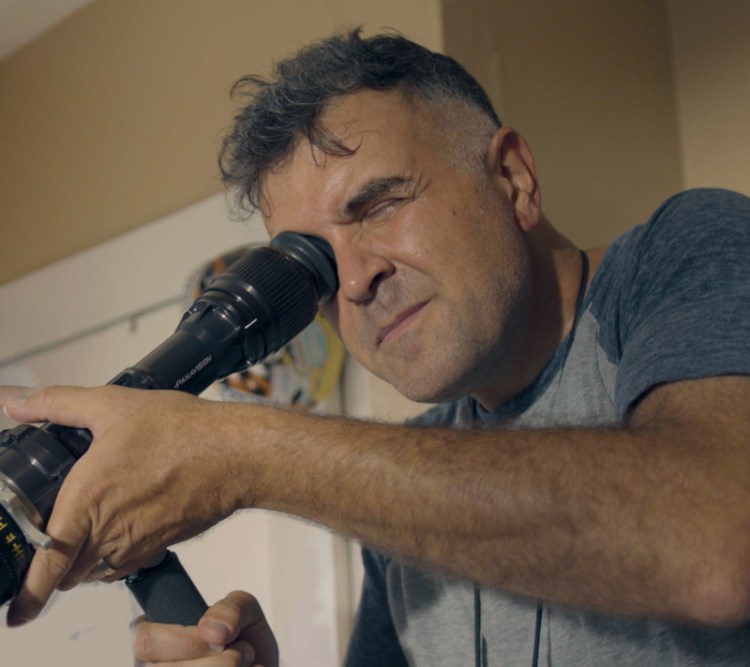
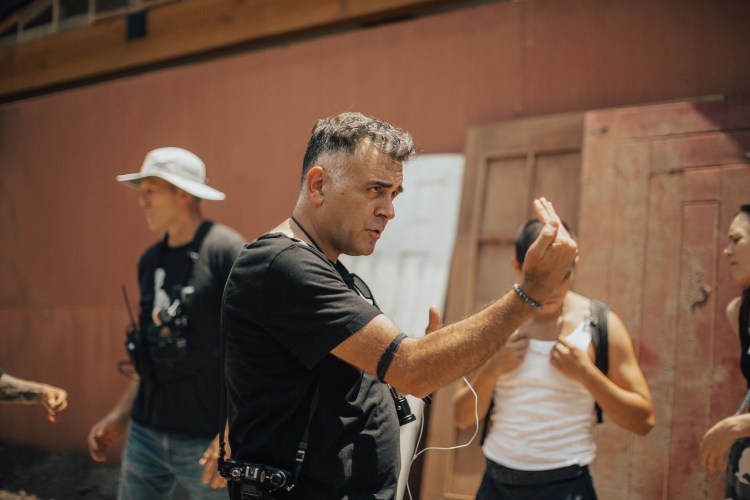
The upcoming feature film Die Like A Man, written, directed and produced by Eric Nazarian, is a coming of age story set in the working-class neighborhoods in the West side of Los Angeles and follows Freddy (played by Miguel Angel Garcia) as he navigates the world of the streets, finding himself at a crossroads after a major decision makes him question his entire life’s path. Nazarian was gracious enough to sit down and talk about the film, his background and much more in this incredible and sprawling interview. A huge thanks to Eric for having the chat, and be sure to watch the film when it releases on April 25th when it comes to VOD, and if you’re in the Los Angeles area from April 18th-24th, where the film will be screening at The Million Dollar Theatre for a full week, with tickets available here for the April 17th premiere, with tickets for the 18th-24th screenings here.) Check out our conversation with Eric below! (Note: This interview has been edited for length.)
BitPix: So what inspired you to make Die Like A Man?
Eric Nazarian: I think many things inspired me. I think the first one was L.A. The true Los Angeles has been missing from the film ecosystem for a long time. The real L.A…the L.A. of the streets. I grew up the son of a cineaste and filmmaker from Soviet Armenia. The films that my dad and I really bonded over were films like E.T. and Empire of the Sun by Spielberg and then at the same time, movies from the streets like Mean Streets and Goodfellas by Scorsese.
Growing up in L.A. in the ‘90s was such an insanely violent time, yet the only part of L.A. that we saw on the screens were the Nightly News. When I was at USC film school, I wanted to find a way to tell the story of L.A that was honest, but that wasn’t dehumanizing. The city on-screen felt to me like a city that was meant to be destroyed in some way. Whether it’s To Live and Die in L.A. or The Terminator or all these tentpole chaotic films, the city always felt like a chaotic place meant to be destroyed in the movies, especially in the dystopian science fiction films. The real multicultural streets were absent for me. As an immigrant, I always felt films were incredibly lacking in that type of representation.
BitPix: So was there anything personal that inspired you to tell this specific story, since you grew up in the area?
Nazarian: I came back when I was at USC film school and it was a kind of a very weird incident that never left me. And then it just kind of mushroomed into the seeds of Die Like a Man about 12 or 13 years later. As a USC Film school undergrad, in ‘98 I was a cinematographer for our 310 class, which was our second semester project. I went to downtown L.A. to scout some locations in Pico-Union where the street vendor community was. As I was taking out my mini DV camera, this kid just rolled up on a bicycle. He probably was about 14 years old. He saw the DV camera, gave me a cautionary glance then pulled out what looked like a .25 pistol. I just froze in my tracks because this was a very crowded street and nobody was paying attention to what was happening. They were just street vendors and pedestrians walking by. I noticed he had a neck tattoo of the name of a gang that I recognized from my high school years. I was very nervous and remembered two guys that I knew from that neighborhood and mentioned that I knew those two guys by their street monikers. I don’t even think he processed what I was saying. He just put the gun away and pedaled away. I looked around me at the sidewalk vendors and the people around. Nobody could care less. And that never left me. I always wondered what happened to that kid. Did he go to prison? Did he get killed? Did he turn his life around? What happened to him over the years?
Flash to, you know, 10 or 11 years later in 2011. I had gone through some painful losses and was organizing my old storage boxes when I came across my USC Film School materials. Then, BAM. The memory of that kid on the bike just came flooding back to me. The story for Die Like a Man started to ferment at that moment with an image in my head of a kid with a gun on a bicycle and a terrible decision he makes that he learns to regret. I had to tell that story. It was about machismo and violence that we, in a patriarchal society, expect boys to perform to become men or champions by defeating through violence and blood. Whether it’s a gang, whether it’s a military, a biker club, the Taliban, all these damn unwritten rules are the same. In the law of the jungle, the strongest is always the one that makes the rules. And I felt I could consolidate all that into Freddy’s journey.
BitPix: That totally makes sense. That’s fascinating, because I know that a lot of more modern thrillers and dramas are set in that kind of area of L.A., there is a lot of focus on gangs and gang violence. And so to have that kind of personal experience growing up in the area and having experience with that kind of culture makes it very personal in a way that I don’t think a lot of other filmmakers are going to be able to pull out of themselves.
Nazarian: Thank you so much. My whole background is in photojournalism, so I covered a lot of this in the 90’s and early 2000’s. The gangs of L.A, post-war life in Armenia and the Southern Caucasus, particularly Nagorno-Karabakh (a land conflict between Armenia and Azerbaijan that has spanned decades). So, to come back and see the aftereffects of combat have been a constant in L.A and the Southland, as well as in the Southern Caucasus in Armenia, where I was born. So these themes, like these unrelated worlds of ethnic warfare and street warfare on the West Coast and in the Near East had the same common denominator. I didn’t realize [the similarities until many years later.
But I will say that one of the things I would like to preface about the film is that this is not a gang film. It’s not a drug film, it is a rite of passage story about all the wrong things that we teach boys to do to become men. If you were to put the story of Freddy and Solo away from the streets and into a boot camp, Solo would be the hero, right? Because he’s the drill Sergeant, just teaching the young buck private how to kill.
These are themes that are very important to me that need to be humanized. That’s why I really wanted to take my time with the character’s journey. First half of the film is all brainwashing. The shooting, the push-ups and acting tough. The second half is about regret, a road to conscience and self-forgiveness.
BitPix: I love that. It’s a very good message to put out there, especially for younger boys and like men as they come into adulthood.
Nazarian: Yeah, exactly. And it’s also about themes of loyalty and belonging. Whether you’re in high school football, or a kid recruited by the Taliban, you get tested and hazed, right? These cultures have no idea about each other, yet they do the same exact thing. So, what is it that is intrinsic to males where they have to constantly be making a pissing contest out of everything that messes around with other people’s lives?
BitPix: I love the exploration of that. I think that exploring that theme is not only important to just for people to see who are that are part of that, but also those who might see that kind of stuff in their life through either family, or friend groups or just out in the wild. To be constantly proving your own toughness and your own masculinity in ways that are just going to harm yourself down the road.
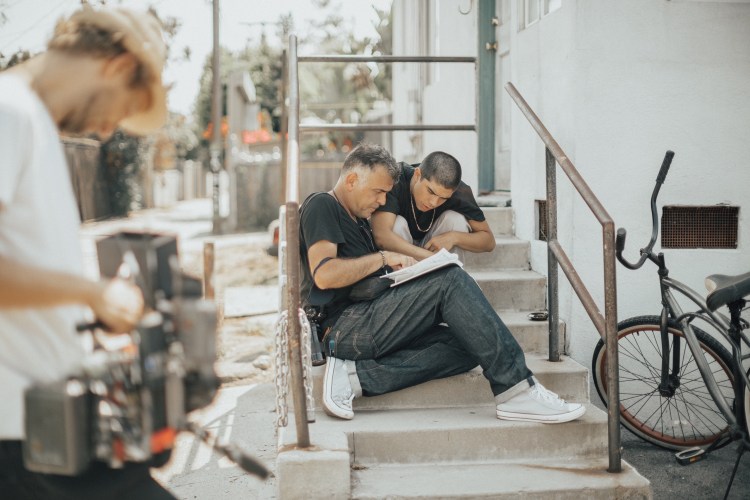
Nazarian: It’s a journey into uncomfortable territories. To make a truly uncompromising, honest and raw film, unfortunately requires a lot of struggle for a great many years because I don’t want to and can’t sell out. I want to stay true to my muse and the original inspiration. Everybody talks about integrity but nobody really invests in it. I invested in myself, my friends did and I made the film, in the spirit of all the maverick TRULY independent filmmaker masters that inspire me like John Cassavetes, Jean-Luc Godard, Jim Jarmusch. I made this film frame by frame without one millimeter of compromise and just really wanted to be proud of that solo struggle with my remarkable actors Miguel Angel Garcia, Cory Hardrict, Mariel Molino, Frankie Loyal, Berenice Valle. I really went to the streets and to the communities that I knew in Venice and Santa Monica. When you say Venice, Santa Monica, you’re thinking palm trees. The beach. A pina colada. You know, Venice Beach is the second biggest attraction in California next to Disneyland, right? But nobody talks about the dark side of the streets on the Westside that have been there for 100 years. Some of the oldest neighborhoods are there. DogTown, skateboarding, it all started there side by side with the oldest gangs in Venice, Santa Monica, Culver City. You have a multicultural small microcosm of L.A. County right there within walking blocks of each other. There are so many histories of survival, multiculturalism and strife and endurance in that part of the city. I don’t want to only dwell on the strife. I want to tell a cautionary tale that hopefully can be an inspiring work of art.
BitPix: And I definitely think you did. And we keep talking about it being Freddie’s story and you know how the focus is on Freddy’s journey in the film. And I just want to say that Miguel Garcia (the actor who plays Freddy, the film’s lead) was incredible in this.
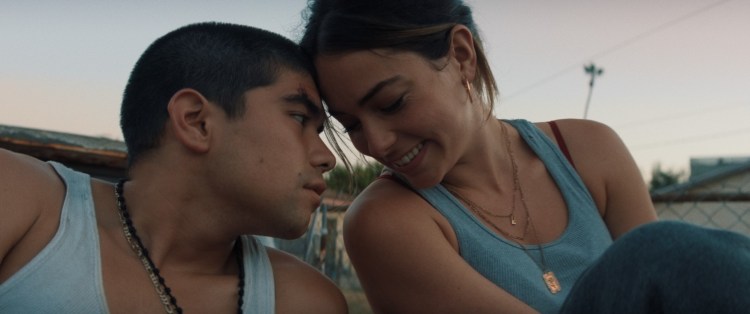
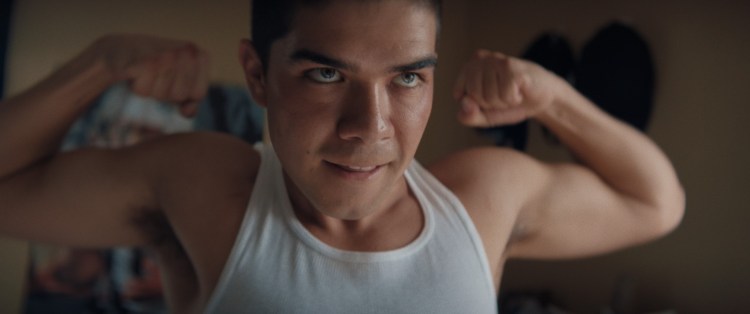
Nazarian: Miguel is my brother for life. I speak to him practically every other day. This was the role where I wanted him to break through. He is our next Oscar Isaac. This is like his River Phoenix breakout role, like in Stand By Me. He has all the chops and focus of a young Marlon Brando. His range is phenomenal. The amount of dedication Miguel gave, I’ve never seen an actor that focused alongside the masterful Cory Hardict (who plays Solo) and the gracious conscience of the film, Mariel Molino (the actress playing Freddy’s girlfriend Luna). I love my actors so much as family. We worked so hard to really tailor every role to fit them. I took Miguel to the LA County Prison, we taught him to shoot the .38 at a live shooting range in Chino.
I did everything I could. All that Stanislavsky and the method acting stuff I learned from my father Haik, I put into effect on this film. I just love directors that have familial ties to their actors like Elia Kazan did; also John Cassavetes, Mark Scorsese, Francois Truffaut, Sam Peckinpah and Spike Lee.. Working the script to really match the actor’s strength is one of my passions in filmmaking and really hand-crafting the story.
BitPix: Yeah, I really, really loved his performance. You said you had this really strong relationship with him. Where did you first meet Miguel?
Nazarian: We met on on a call because he was shooting a film in the Dominican Republic. When I spoke to him on FaceTime, I told him “I didn’t want to look at any films you did.” I wanted to meet him to see the energy because I think reels are very misleading. The real person, “R-E-A-L is more important than the r-e-e-l. You know what I mean? That’s really important for me to discern. You want to see that energy. Even on that FaceTime call, I was like “this kid’s got it, man.” He’s got the commitment and he has the presence and the hunger.
BitPix: That’s impressive. I love a director/actor relationship that starts off as not something like ‘I hired you to do a thing, go do a thing.’, but with an actual bond or a friendship or some kind of relationship that goes beyond just the behind the camera work.
Nazarian: Yeah. Absolutely. I mean, my father Haik is my biggest hero in life. As a filmmaker, what Martin Scorsese and Robert DeNiro have done for 50 years, to me, is one of the most profound actor/director relationships in history. Their unity and loyalty as artists and friends is a very big inspiration. There’s nothing more important to me in this world than trust. And trust is so rare, especially to have a young brother like Miguel. He’s so committed, so trusting. He worked his ass off to get the details right. This is about the love for cinema and the love for cinema requires trust. And having that unconditional bond so you can go out there and make magic. As much as I love my script – I wrote three drafts of the script, nothing more. Now, you have to take it and put the flesh in blood on it and make the actors better than the pages.
BitPix: I know you said you did a lot of research, you grew up in the area. You had that very personal anecdote earlier. How much time did you spend while filming, or while location scouting, in these areas, just really trying to absorb the atmosphere of it?
Nazarian: I grew up in this whole area so I had 20 plus years of experience when I wrote the film, because I knew the West Side very well since my USC days. I knew the Venice/Santa Monica Borderlands and it was very different at night when the boardwalk gangsters came home and they were just all these different energies. The skaters, the gangsters, the old school Oakwood guys. And years and years ago, back in the 90’s, I used to be a young, aspiring DJ. So we did little house parties. I remember going there a couple times and doing these little DJ spins, I was always fascinated by just how intercultural it was. I wanted to reflect an L.A that was very black and brown, and very integrated. It wasn’t like what I saw in other films in the South and East side which were segregated ethnically. This was more about a community, about a structure, about a history. And it was about wanting to capture the osmosis. I spent a lot of time in Venice and Santa Monica. My friend Oscar de la Torre, who’s from the Pico Youth and Family Center (PYFC), is a native who truly knows the history and legacy of the Westside communities. And what I wanted was the heartfelt support to film on the West Side, and see who could really help me find the right people to really talk to and engage in the film.
I wanted to create a four-point program, which is basically social change through filmmaking and film literacy. By engaging non-professional actors and training them. Paying into the local community, buying our food as much as we could from the local vendors. Giving back to the community and not the conglomerates. And also having academia and activism engaged – talking to my academic friends and wanting to collaborate in a way that could be an educational tool, as well as a sincere driver for social change. I think we accomplished something with the very minimum means that we had.
BitPix: I love that like you’re using whatever platform you have and whatever skills you have to do that. Especially when you’re doing something that’s as arduous and as difficult as making a film. To use local actors and or people who aren’t really familiar with the craft to say ‘Here, I will show you how to do this, because I want you specifically to do this thing that I want to display.’
Nazarian: Right. It’s about playing something that comes from a true place, and not just ‘Oh, I want to tell the story because I think it’s a cool world that hasn’t been done.’ I think this was a lot of personal connection with this material because I saw so much of it. But also what I didn’t see, which was the right way to represent a story of a young man, psychologically and spiritually. I wanted it to be a spiritual story from the street, and not, not a religious one, but a spiritual one.
It was funny. I just came back from the Sofia International Film Festival in Bulgaria, where we had the International Premiere. And even after the screening, we had these engaging Q and A’s. And they’re just talking about the whole world. How people are constantly pressured into doing things that they don’t want to do, or they don’t know that they don’t want to do it. So it was a refreshing, emotional experience to see. Beyond borders, the spiritual aspect of Freddy’s journey is what resonates the most. The film is not about the triggerfinger. It’s about the battleground between your ears. How and why we make critical decisions based on what is expected of you, and what you’re taught is the right thing versus the wrong thing. That the film is about the war within your mind.
BitPix: I think that is really awesome and I love that you’re using the decisions that Freddy is making in the film are the catalyst towards showing the progression of a person who was raised a certain way, and then made a big choice that maybe wasn’t the good choice. And now is kind of having to deal with that fallout and progress as a person, if this person that they thought they needed to be is the right person to be. I think that journey is really special. And it’s shown in a really interesting way with Freddy.
Nazarian: Yeah, thank you. Thank you so much. I’m so glad that that came across, that really was a labor of love.
BitPix: Oh, I can imagine. You were mentioning that you were having international premieres. What’s the reception been like so far as you’re getting ready for an actual official release?
Nazarian: It’s been amazing. I mean, I’ve done a lot of focused screenings, and I’ve never had a non-emotional response. I think that’s been something that I’m very grateful for. I think probably the most emotional response was a mom who had recently lost her son. This was about a year ago, when I was sharing the final cut of the film. This lady had tragically lost her son in this horrible shooting. After the screening, she was bawling. We were all just overwhelmed and I’m very choked up and teary-eyed and she just told me, “I wish that boy who murdered my son had seen your film the night before. Maybe he would have changed his mind.” I cried like a baby and that was it for me. Her words scarred into my soul to this day. From all her words that I just told you, the one word that really that shot through my heart was the word, “Maybe.” The fact that the film has the power to “maybe” change somebody’s life…that is SO devastatingly cathartic. Her comment was the biggest honor. That day, I knew in my heart that I made this film for this grieving mother, and I dedicated that screening to her. Unfortunately, I’ve lost touch with her. She’s just had a very difficult time. Because you just don’t get it back, man. The life you created that someone takes with a bullet. It is so so tragic yet our society and government do nothing to help the most defenseless. This must change. Artists and people who care must unite to change it. That experience really rocked me to my core. Cinema and art have healing power.
BitPix: I don’t blame you in the slightest for bawling after that. I would probably still be crying. That is so powerful, and to be able to get a response like that from something you put so much love and effort into. It’s both destroying and so gratifying.
Nazarian: And that’s when you realize – “Wow, careful, what you wish for.” Because all I wish for is to change people’s lives emotionally. Wake them up. I bled for my cake and I had it right there. That mom’s honest response became the bulletproof vest that I have no matter what will happen with the film. I knew I would always have this very kind-hearted mother’s response who was enduring so much pain, feeling moved by the story and finding healing in it.
BitPix: You were talking about having premieres. Now that film is locked and ready, when is it going to start getting out to wider audiences?
Nazarian: Yeah, I mean I basically curated the theatrical myself because, you know, it’s such a difficult time for the theatrical indies. I wanted to curate it as sort of a coming together for our communities in L.A. with benefit screenings for the non-profits. I want to be free to do a real curated, awesome seven day launch in the downtown L.A., then expand it to a couple different theaters. The VOD drops on APRIL 25, the day after the last L.A. theatrical for this round. So you have seven days where you’re living the cineaste culture with conversations and people talking about it and the reviews. And then, if people want to watch it in Wichita, El Paso, or in Tallahassee and North America, it’ll be available to them on VOD. That’s the good thing with technology. My hope is to continue with a roadshow style release.
I’m looking to partner with theaters that would be willing to do a split, because basically I’m doing all this myself and want to get my wonderful investors at Boycott Entertainment paid back. The VOD is being handled by Gravitas.I’ve had to micromanage and be very, very careful with how I want the messaging of this film to be exported, because this is not a gangster film and not a drug film. Unfortunately, I’ve had to battle corporate misconceptions and dyed-in-the-wool “genre thinking” because people sometimes just put you in a crayon box and don’t look at the shades of gray that you’ve done in the movie. The official theatrical poster that my wife Sera designed with Miguel Angel Garcia staring at the viewer – face half-streaked by a red color that reflects his duality as an angel about to do a demonic act – really speaks visually to the film’s soul.
BitPix: That rules. So you said you’re doing a week long, L.A. based community screening?
Nazarian: Yeah, the premiere is on the 17th, and the screenings are 2 pm, 5 PM, 8 P.M from the 18th to the 24th. So we have six days, and then the VOD drops on April 25th. The screenings will be at the legendary Million Dollar Theatre in Downtown L.A. presented by Secret Movie Club. (Ticket info for the screenings are here for the premiere on April 17th, and here for the dates from the 18th to the 24th at the Million Dollar Theater (address in the previous hyperlink.)) (Note: Photos of the cast from the premiere are below in celebration of the incredible work done to bring this film to life. All photos by Charlie Nguyen.)
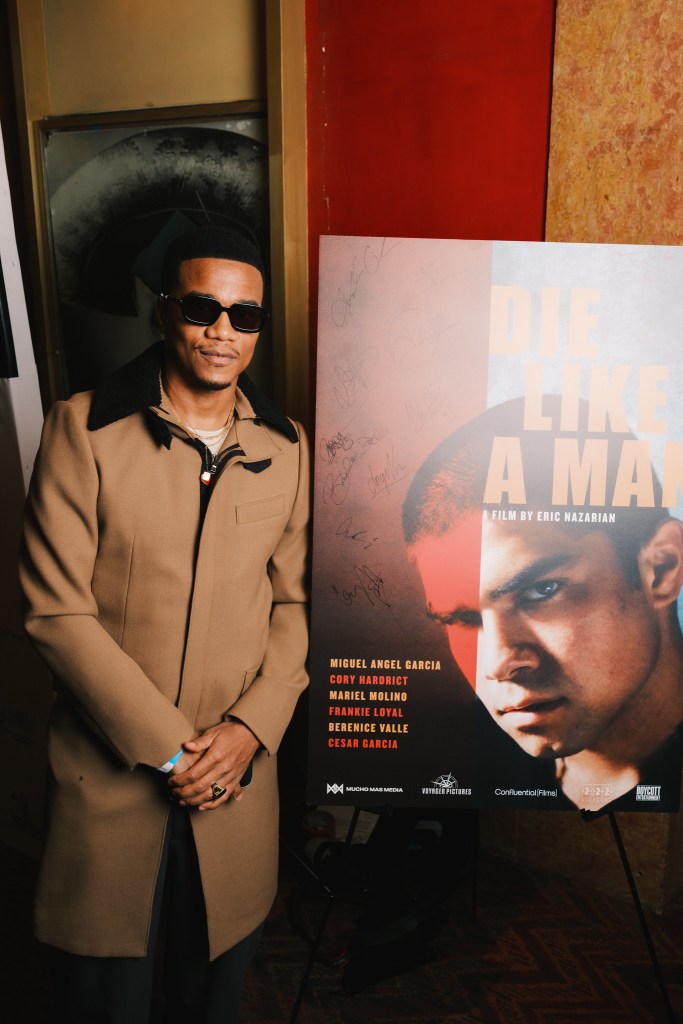
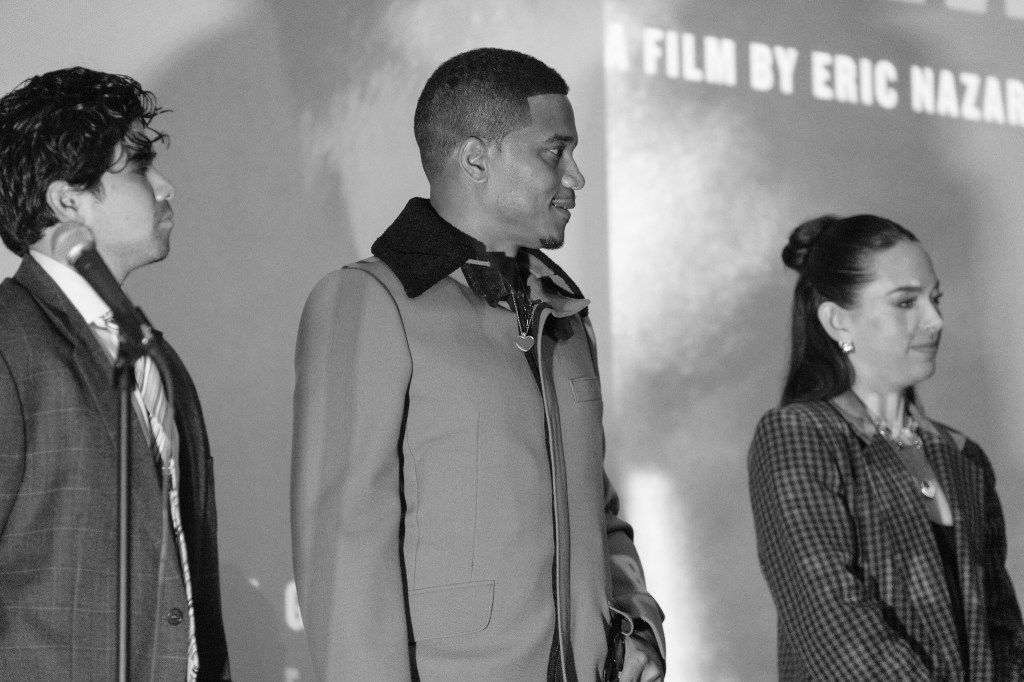
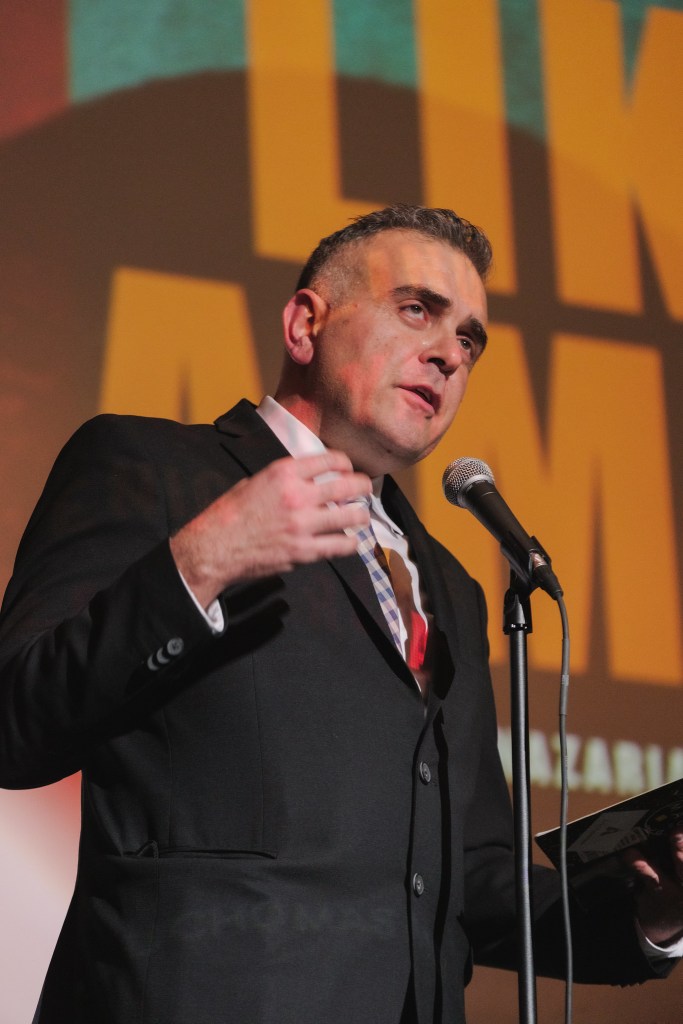
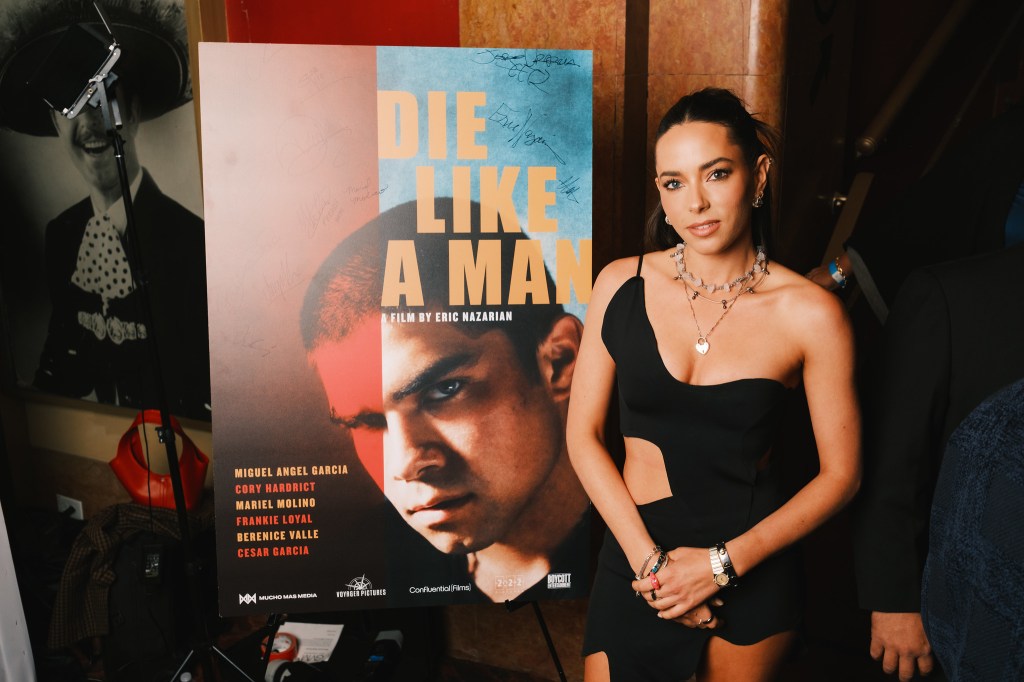
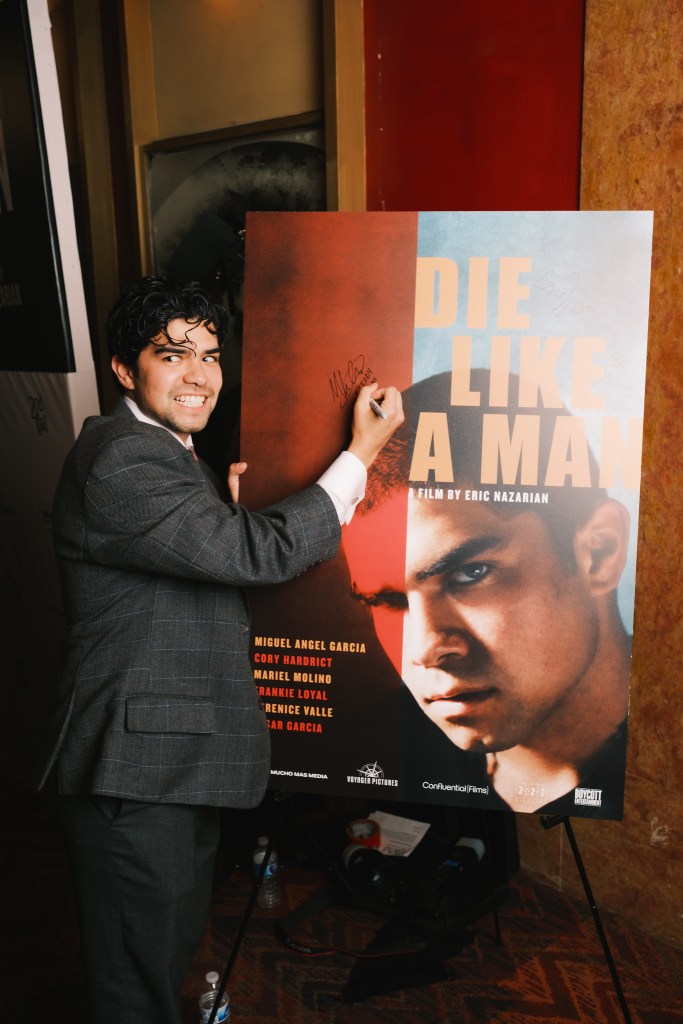
A big thanks to Eric for the incredible conversation! It was a delight to get to talk to him, and to get more information about Die Like A Man. For those in the Los Angeles area, be sure to look out for ticket information for the local screenings, and for those who can’t, be sure to check out the film on VOD when it drops on April 25th. And be sure to follow Eric on social media @ericnazarian @dielikeamanofficial @secretmovieclub for more information about the film and anything else he has on the horizon. Thanks for reading!

